How to Clean Makeup Brushes: By Hand vs. an Automatic Brush Cleaner
Most of us know we should wash our makeup brushes more often than we do. The problem is rarely knowledge — it is time. Hand-washing a full set means a sink full of suds, sore fingertips and a towel of brushes drying for a day. Here is a simple way to clean makeup brushes properly, how often to do it, and when an automatic brush cleaner is worth having.
How often should you clean makeup brushes?
A practical rhythm many makeup artists follow:
- Foundation and concealer brushes: about once a week. Cream and liquid products build up fastest.
- Eye brushes: every week or two, and between colors if you want clean shades.
- Powder, blush and bronzer brushes: every two weeks or so.
- Sponges: after every use or two — they hold the most product and moisture.
If a brush looks stained, smells, or leaves streaks, it is overdue.
How to clean makeup brushes by hand
- Wet the bristles only. Hold the brush bristles-down under lukewarm water. Keep water away from the ferrule (the metal part) so the glue holding the bristles lasts.
- Add a drop of cleanser. A brush shampoo or a gentle, fragrance-free soap works well.
- Swirl and work it in. Swirl the brush in your palm or on a textured silicone mat until the lather looks clean.
- Rinse until the water runs clear.
- Squeeze, reshape and dry flat. Gently press out water with a towel, reshape the head, and lay brushes flat or bristles-down so water does not run into the handle.
It works, but a set of ten brushes can easily take twenty minutes plus overnight drying.
What an automatic makeup brush cleaner does
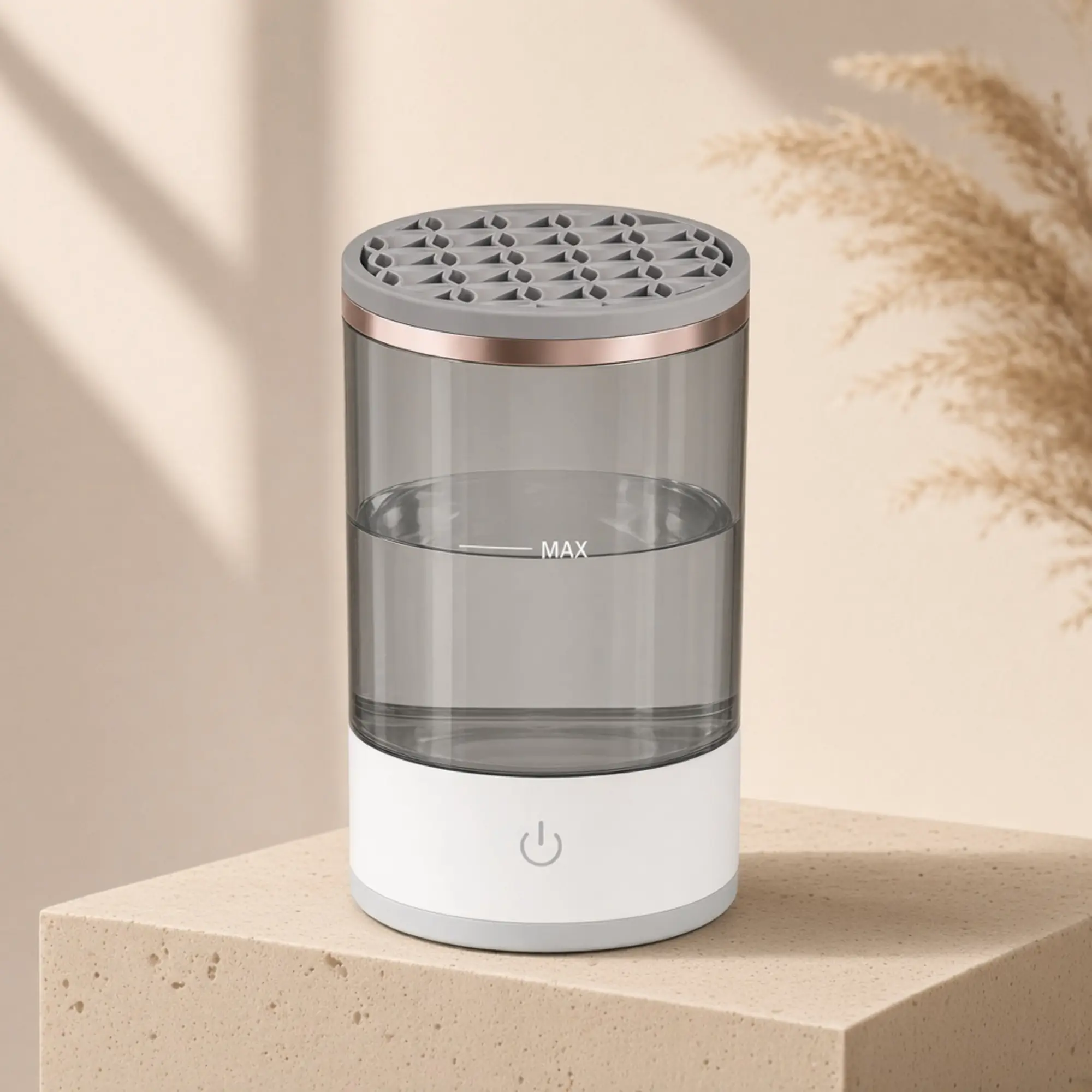
An automatic makeup brush cleaner (sometimes called a brush cleaner machine or brush spinner) does the swirling for you. Our Automatic Makeup Brush Cleaner is a compact countertop unit: you add water and a drop of brush soap, insert a brush through the top holder, and one press spins it clean. Then you lift the brush above the water line and spin again to throw off excess water.
How to use it
- Add water and a drop of brush cleanser to the bowl.
- Insert a brush through the top holder.
- Press to spin clean.
- Lift the brush above the water line and spin to remove excess water.
- Change the water when it looks cloudy, and let brushes finish air-drying.
It has one-touch start, runs quietly, and fits most powder, foundation and eye brush sizes. The base should never be submerged — switch it off before you rinse the bowl.
Hand washing vs. a brush cleaner machine
| By hand | Automatic cleaner | |
|---|---|---|
| Time per brush | 1–2 minutes | Seconds of spinning |
| Mess | Sink splashes, wet towels | Contained in the bowl |
| Drying | Squeeze, then air-dry | Spin off excess water, then air-dry |
| Best for | Very large kabuki or fan brushes | Weekly cleaning of everyday brushes |
Tips that keep brushes lasting longer
- Use lukewarm, not hot, water.
- Don’t soak brushes handle-first or leave them standing in water.
- Dry them bristles-down or flat — never upright while wet.
- Replace a brush when the bristles shed constantly or lose their shape.
FAQ
Can I use dish soap to clean makeup brushes?
A small amount of gentle soap works in a pinch, but a dedicated brush cleanser rinses out more easily and is kinder to natural bristles.
Does a brush cleaner dry brushes completely?
Spinning removes most of the water, so brushes dry much faster — but give them some air-drying time before use.
Which brushes fit?
Most powder, foundation and eye brushes fit the holder.
Ready to make it a five-minute habit? Shop the Automatic Makeup Brush Cleaner — it ships free in the U.S. — or browse all beauty tools.
This is general beauty information, not medical advice. Patch-test new products and stop use if irritation occurs.